Children’s Eyecare

Typical warning signs to look out for
  • One eye turns in, out, up or down.
  • Complaints of frequent headaches.
  • Frequently rubs eyes or blinks a lot.
  • Screws up eyes when reading or watching television.
  • Avoids reading, writing or drawing.
  • Has difficulty catching a ball.
  • Fails to make expected progress at school.
  • Develops behavioural or concentration problems at school.
Children should have their first eye examination by the age of three, sooner if any problems are suspected. The earlier a problem is detected, the more effectively it can be treated.

Simmons Optometrists provides free NHS eye tests for all children under 16 and those under 19 and in full time education. If a child is found to need spectacles, a contribution is provided by the NHS.

At Simmons Optometrists, we stock a wide range of spectacles specially designed for children’s faces to choose from, many FREE with an optical voucher. Many have soft nose pads for extra comfort and sprung hinges to withstand extra wear and tear. So remember, regular eye examinations could be crucial for your child’s health care and personal development, so don’t delay and contact Simmons Optometrists for an appointment as soon as possible.
Frames
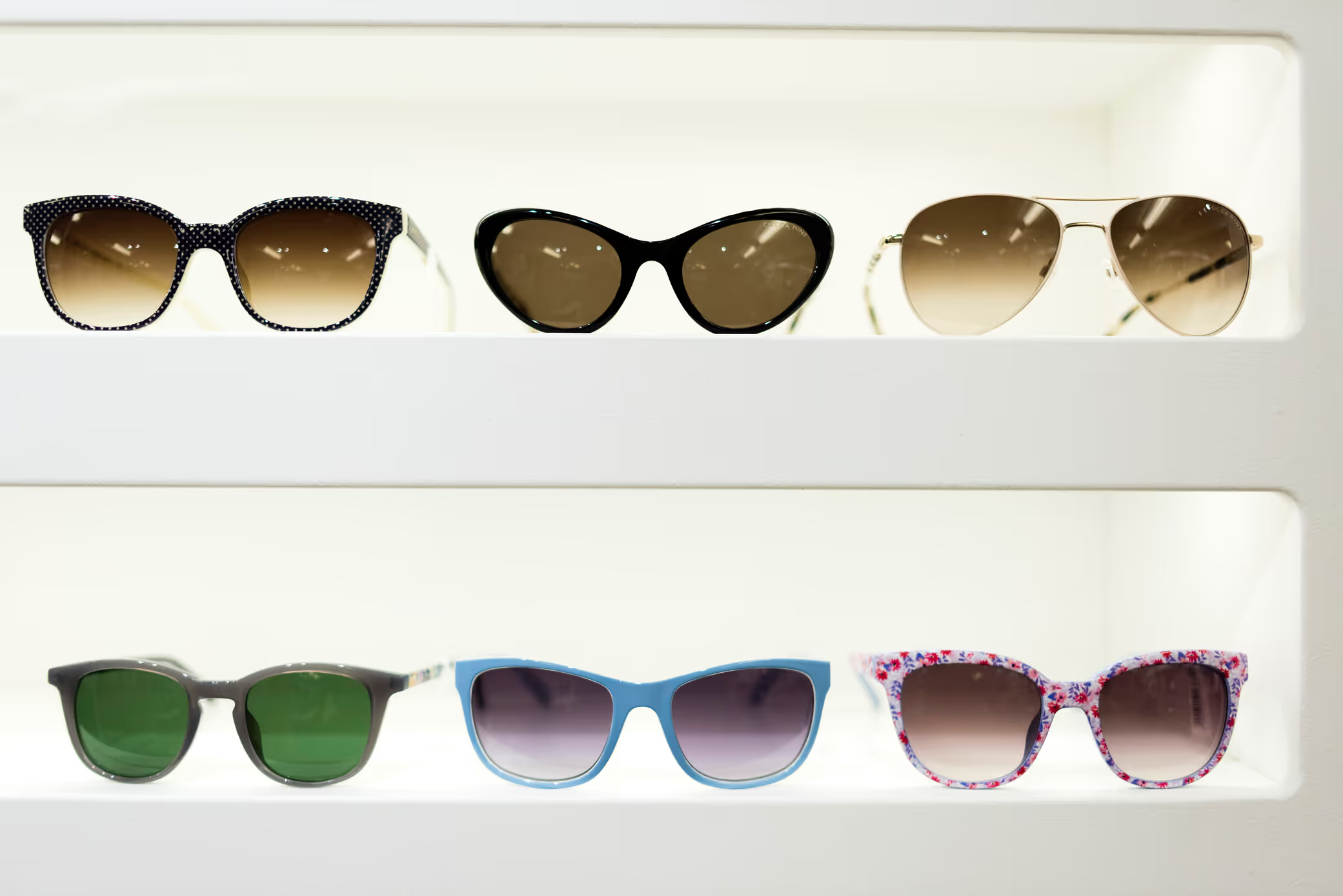
With nearly 200 children’s frames to choose from, many of them completely FREE, with an optical voucher, you’ll find a great choice when you visit Simmons.

In addition, we have more specialist kids ranges for infants under 1 year old and those with Down’s Syndrome. Just get in touch to see how we can help.
Icon
Sunglasses & UV
Our selection of kid’s sunglasses is designed specifically to appeal to children (so they actually want to wear them!) and, most importantly provide maximum UV protection.

Children’s eyes are delicate

You will already smoother them in sunscreen, insist on that sunhat but have you remembered their sunglasses?

Our eyes are ten times more sensitive to ultraviolet (UV) light than our skin and our children’s eyes are at the greatest risk of UV damage. This is because the lens in a child’s eye is clearer and the pupil is larger which means that up to 70 per cent more UV light reaches their retina than in an adult’s eye causing potentially irreversible damage.

Combined with the disproportionate amount of time children spend playing outdoors, research shows that, by the age of 18, children will have already absorbed 80 per cent of their lifetime exposure to UV light.
Icon
Reading Difficulties
Specific Reading Difficulties and Dyslexia

Some children and adults can experience visual distortion when reading print which makes reading difficult and uncomfortable. It can occur in people who are good readers as well as those with reading difficulties and dyslexia.

Approximately 5-10% of the population is thought to have some degree of dyslexia, with boys being more affected than girls. Optometrists do not diagnose dyslexia, but investigate visual problems that can contribute to reading difficulties.

Our dyslexic consultation service is available to help anybody, of any age, with dyslexia or any other learning difficulties.
Icon